
English · 中文

We Human Beings are Robots
Designed by Nature.
Welcome to HKU AIR LAB
Aiming to push the boundaries of human knowledge and provide the transformative technology for our society, the automation and intelligent robot lab conducts research in the intersections of electrical, mechanical and biomedical engineering, ranging from micro/nano to millimeter scale. In the AIR Lab we believe:
Together with intelligent robots,
we create a better world.
With this in belief, we are on a mission to:
- Advance robotics and automation at multiscale for the benefit of humanity.
- Educate the next generation of engineer leaders with life-long learning passions.
- Serve the society with translational science and technology.
Research
Robots and automated systems are comprised of three key components: 1) sensors that gather data, 2) control systems and AI algorithms that process the data and make intelligent decisions, and 3) actuators that carry out commands and interact with the physical world. In HKU AIR Lab, we focus on developing novel sensors and actuators, as well as AI and control algorithms to make intelligent decisions and achieve desired outcomes. Additionally, we are dedicated to system integration to build robots and automated systems tailored for diverse applications, including healthcare, construction, and advanced manufacturing.
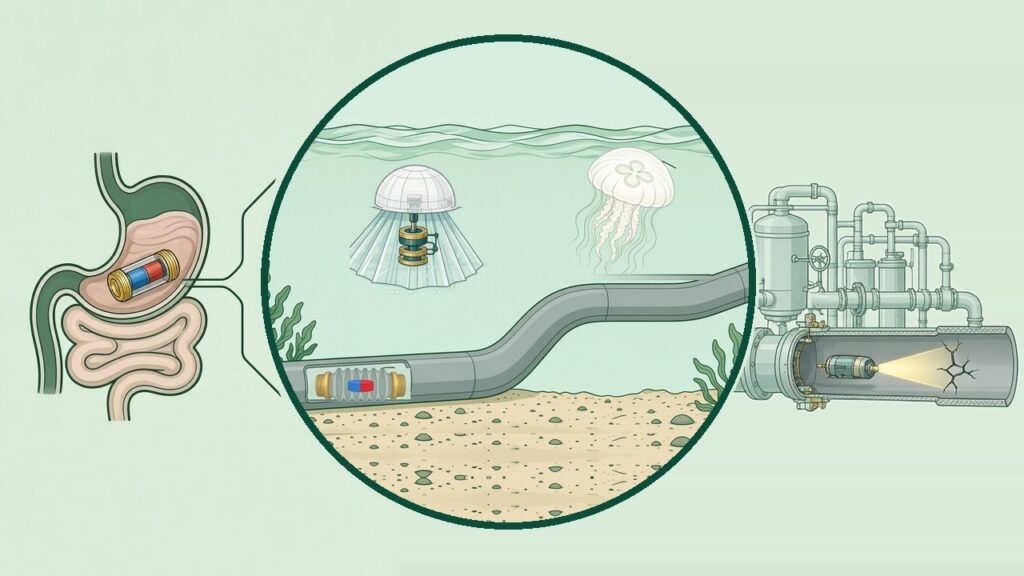
Miniature and Soft Robots
We study how to actuate, sense and control robots that are too small to carry conventional motors and batteries. Our work explores magnetic and smart-material actuation, new locomotion mechanisms that let small robots move efficiently across rough and changing terrain, and soft and origami-structured bodies that fold and change shape. We also develop onboard sensing, external tracking and closed-loop control so these robots can operate reliably without direct observation. These technologies allow miniature robots and steerable catheters to work in confined spaces, such as inside the human body and in pipes.
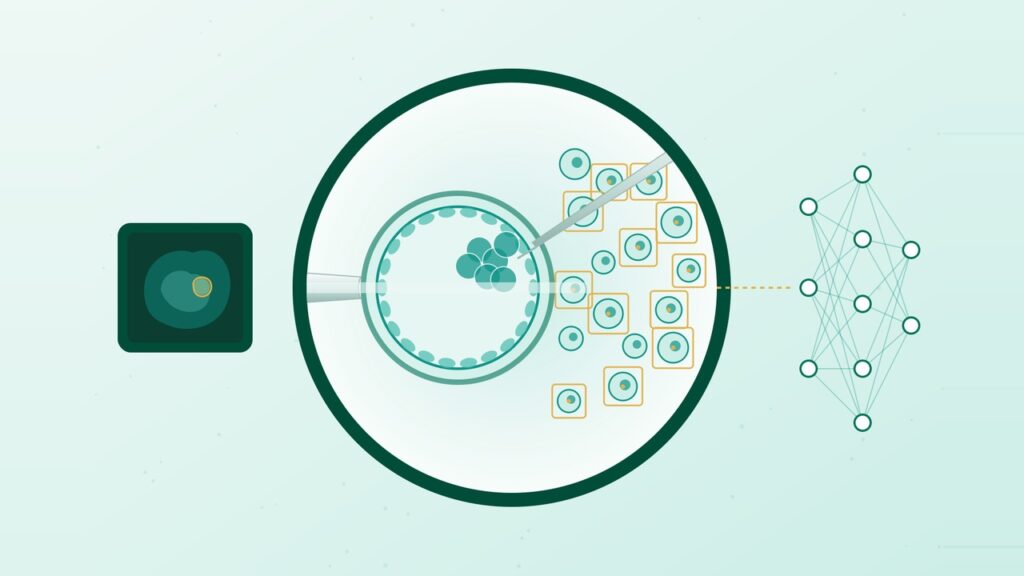
Robotic Micromanipulation and Biomedical Vision
We develop methods for precise robotic manipulation at the micro scale, combining microscope-based visual feedback, accurate positioning of micro-tools and automated procedure design. Alongside this, we develop deep learning that detects, counts and segments small, crowded or low-contrast objects in images, and that learns across institutions without sharing raw data. Applications include cell injection, embryo vitrification, reproductive-cell handling and medical image analysis.
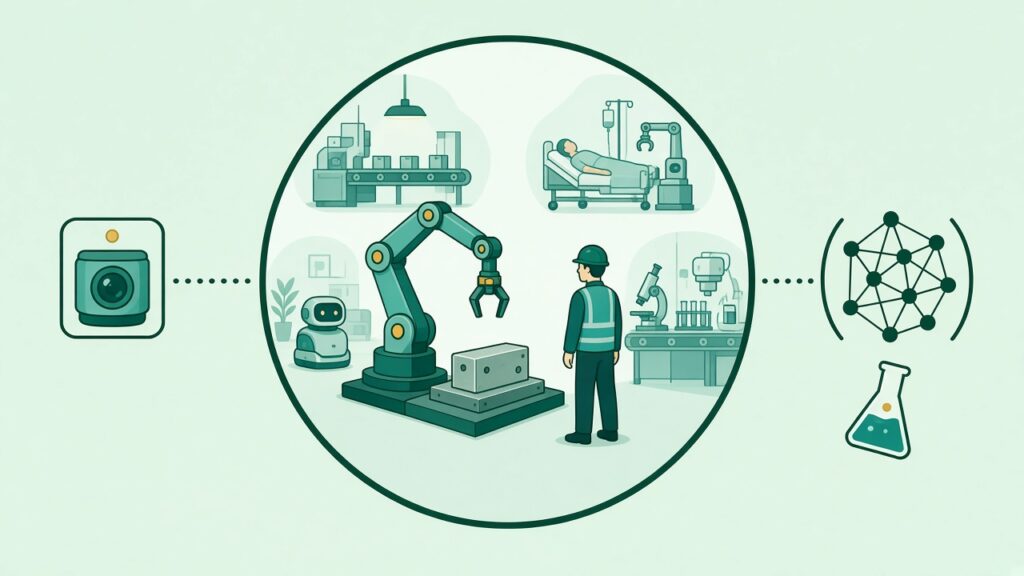
Intelligent Perception for Human–Robot Interaction and Manufacturing
We develop perception technologies that help robots understand people and physical processes. These include image and video understanding that recognises and predicts human actions, wearable and flexible sensors that capture touch, force and gestures, and point-cloud and vision models that infer geometry and quality from measurement data, combined with planning of smooth, accurate robot motion. Applications include intuitive human–robot collaboration, service robots, precision assembly and robotic machining.
Latest News
-
Magnetically actuated momentum-driven millirobots
The research team led by Professor Jun Liu from the Department of Data and Systems Engineering at the University of Hong Kong has published their latest findings in Nature Communications. The paper titled “Magnetically actuated momentum-driven millirobots” (DOI: 10.1038/s41467-025-67936-6) introduces an innovative near-field driven magnetic microrobot weighing only 5.8 g. This new miniature robot can…
-
William Mong Distinguished Lecture cum Workshop “Medical Robotics for Cell Surgery: Science & Applications”
Faculty of Engineering at The University of Hong Kong (HKU) hosted William Mong Distinguished Lecture cum Workshop on October 28, 2025. From left to right: Professor Jun Liu, Professor Yu Sun, Professor Tong Zhang and Professor Yang Lu. Professor Yu Sun from the University of Toronto, Canada delivered a keynote titled “Medical Robotics for Cell…
-
2025 International Conference on AI & Robotics – Ethics and Safety
The International Conference on Artificial Intelligence and Robotics – Ethics and Safety – was successfully held on October 25–26, 2025, at Hong Kong Cyberport, with support from the National Natural Science Foundation of China (NSFC) and the Department of Data and Systems Engineering. Organized under the leadership of Vice President Max Shen as General Chair…
Contact us
The AIR lab shares a culture of being open-minded and transparent. If you are interested in our research, feel free to send us an email. Collaborations and donations are welcome to create a better world together with smart robots.
We are affiliated with the Department of Data and Systems Engineering at The University of Hong Kong.
Email: djliu@hku.hk
Tel: (+852) 3917 2591
Lab Address: HW104M, Haking Wong Bldg., The University of Hong Kong
Office: HW813, 8/F, Haking Wong Bldg. The University of Hong Kong